A Nationwide Teachers’ Network
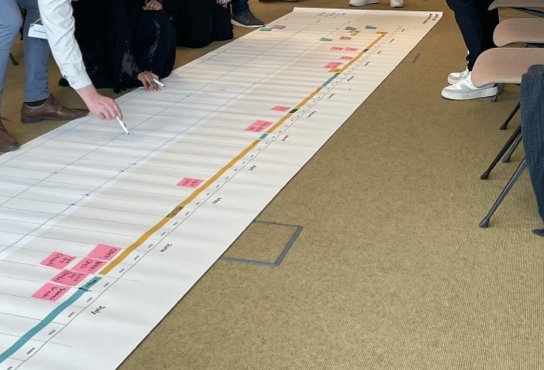
Designing a professional home for teachers, so the people who care for everyone else are cared for too.
Client: A national education foundation in the UAE
Year: 2025
My role: Lead service designer, bridging the learning program and community design
Team: 4 people, 8 weeks
I owned: The launch blueprint, the learning program blueprint and the community playbook, designed as one holistic initiative
At a glance: 43 global and local benchmarks, 7 expert interviews, 17 teachers and educators engaged, 10 stakeholder deep-dives, 4 design principles, 5 signature moments, a 6-month learning program for a founding cohort of 24 teachers from 6 schools.
Challenge
How might we create a national community where K-12 teachers feel supported, inspired and empowered to transform learning?
The foundation wanted to launch a community for Emirati teachers and teachers of Emirati students, working alongside government initiatives and in service of the country's 2030 vision. It would start with a pioneer learning program, whose first cohort would seed the wider community. Our job was to design both as one experience: the program, the community it grows into, and how teachers find their way in.
Approach
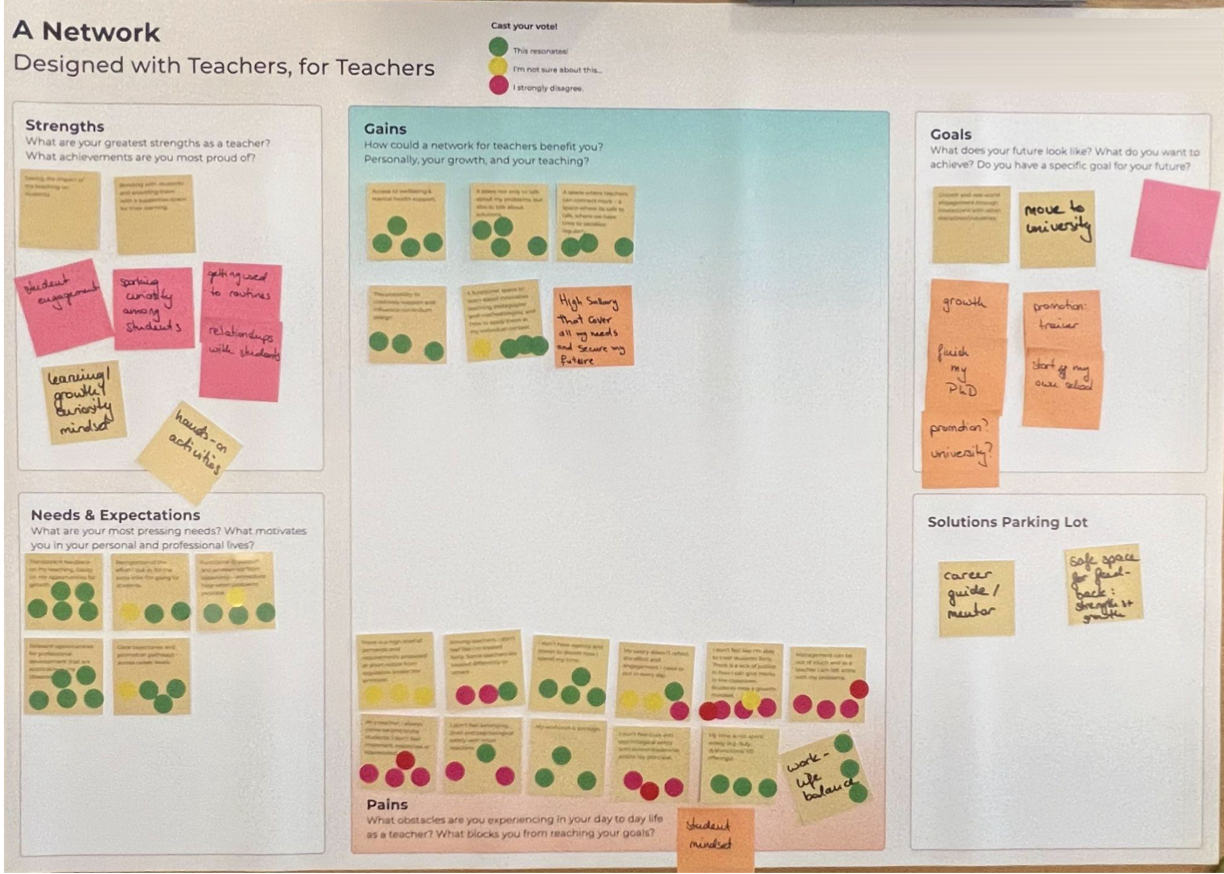
Teachers voted on our early findings: green for 'this resonates,' red for 'I strongly disagree’.
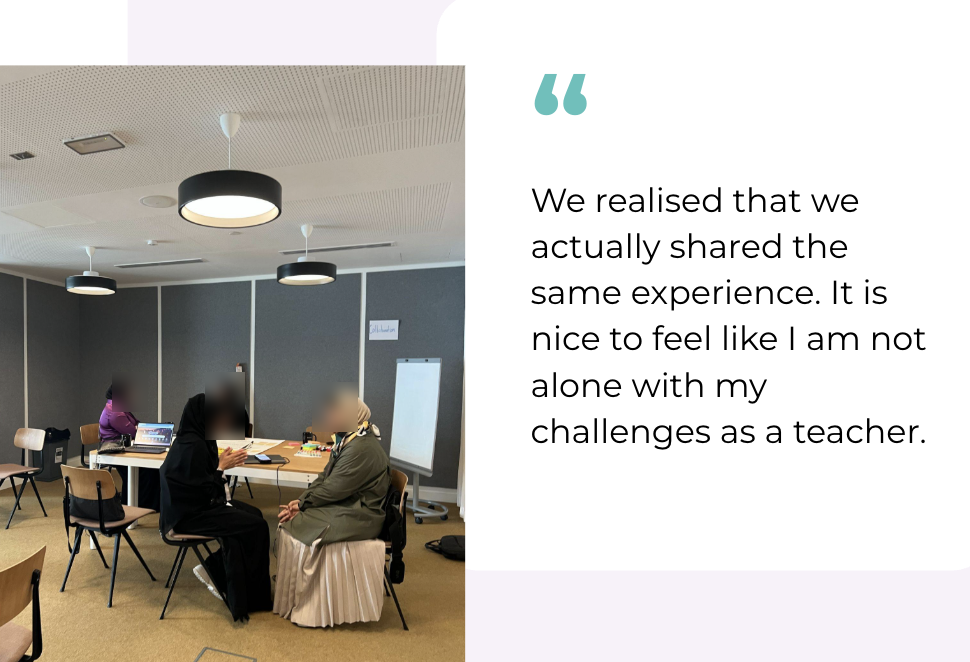
— Teacher, after a co-design workshop
Sizing the opportunity and mapping the ecosystem. We studied 43 global and local benchmarks, from teacher fellowships to professional learning networks, for best practices in curriculum, operating models, partnerships and participation. In parallel, we mapped the country's education mandates and initiatives, to see where a new community could add to them rather than duplicate them.
Listening. 7 expert interviews, 10 stakeholder deep-dives, and conversations with teachers, school leaders and potential partners about their realities, needs and aspirations.
Co-designing with teachers. I designed and facilitated two co-design workshops where teachers made sense of our early findings alongside us. In a World Café, they moved between tables to test our assumptions; they ranked the competencies experts named for a future-ready teacher; they mapped how energy and workload shift across the school year; and they designed the landing page that would make them sign up. Weekly co-design sessions with the foundation's team ran throughout.
From insight to design. Synthesis into themes and mega-themes led to four design principles, which then shaped the community playbook, the learning program and every touchpoint of joining.
Key insights
Teachers care for everyone around them, but few spaces care for them. The research grouped into three themes:
The third place. Not work, not home: teachers lacked a place to connect with peers from other schools, so many felt alone with their struggles. They also wanted trusted mentors from outside their own school's hierarchy.
Prestige, rhythm and recognition. Engagement lasts when joining feels selective and meaningful, when activities follow the school calendar and teachers' energy, and when contributions are seen and celebrated.
Future-ready, human-first. Teachers valued skills they could apply in their own classrooms. Experts stressed that human qualities like openness and resilience matter more than ever, especially in the age of AI.
The core insight: teachers stay engaged when a community is locally anchored, selective enough to carry prestige, intrinsically motivated and peer-led.
In their own words:
"We called it a therapy session. Every Friday after school we would go out, have lunch and just vent." — Teacher
"There is a radical change, a professional lift, that happens when teachers are exposed to teachers from other schools." — Education expert
"Teacher wellbeing is a really important metric. If teachers aren't happy, students aren't happy." — Education expert
Four design principles
The insights became four principles that guided every decision, from who joins to how a gathering feels:
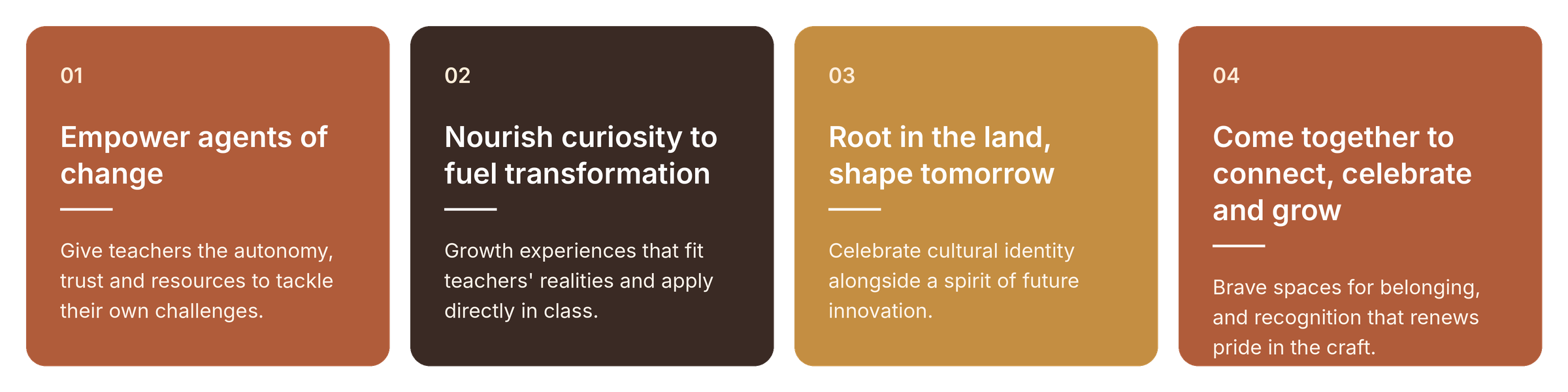
What we designed
A community playbook on five pillars: Purpose, People, Experience, Systems and Growth, with governance, success metrics, incentives and a Year 0–5 roadmap. Its purpose: to create a professional home for teachers, driving transformation through learning journeys, tailored experiences and a trusted community.
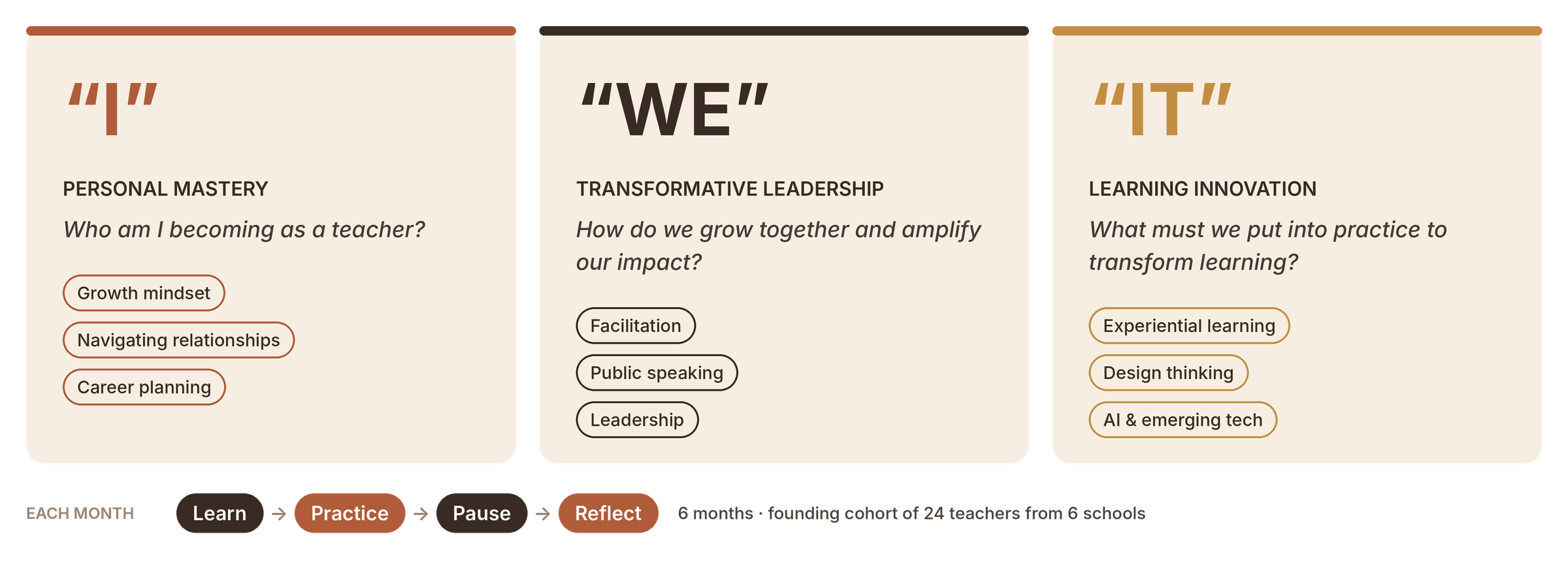
A 6-month learning program for a founding cohort of 24 teachers and 6 school leaders from 6 public, private and charter schools, aligned with the school calendar. It works on three levels:
Five signature moments that turn a program into a community:
Closing ceremony: teachers exhibit their learning portfolios, and schools are recognized for leading transformation.
Onboarding weekend: a rite of passage into the community, with an opening circle, a community dinner where a graduate shares their story, and each new member paired with a guide.
Teacher hackathon: the community votes on a real classroom challenge, and "innovation squads" prototype solutions for a grant to implement them.
Spark sessions: informal evenings with an inspiring leader from outside education, so teachers see themselves as part of a bigger picture.
Community circles: small, self-organized monthly groups of 5–6 teachers, a safe space to share a "rose, thorn and bud" from their month.
The joining journey: an invitation-only start through school principals, then an application, a hackathon-style group assessment, and the onboarding weekend. Two service blueprints cover outreach, recruitment and onboarding, and the month-by-month learning program.
Outcome
We handed the foundation a launch-ready initiative: the community strategy and playbook, the full learning program, two service blueprints and a landing page prototype, all built around the four principles.
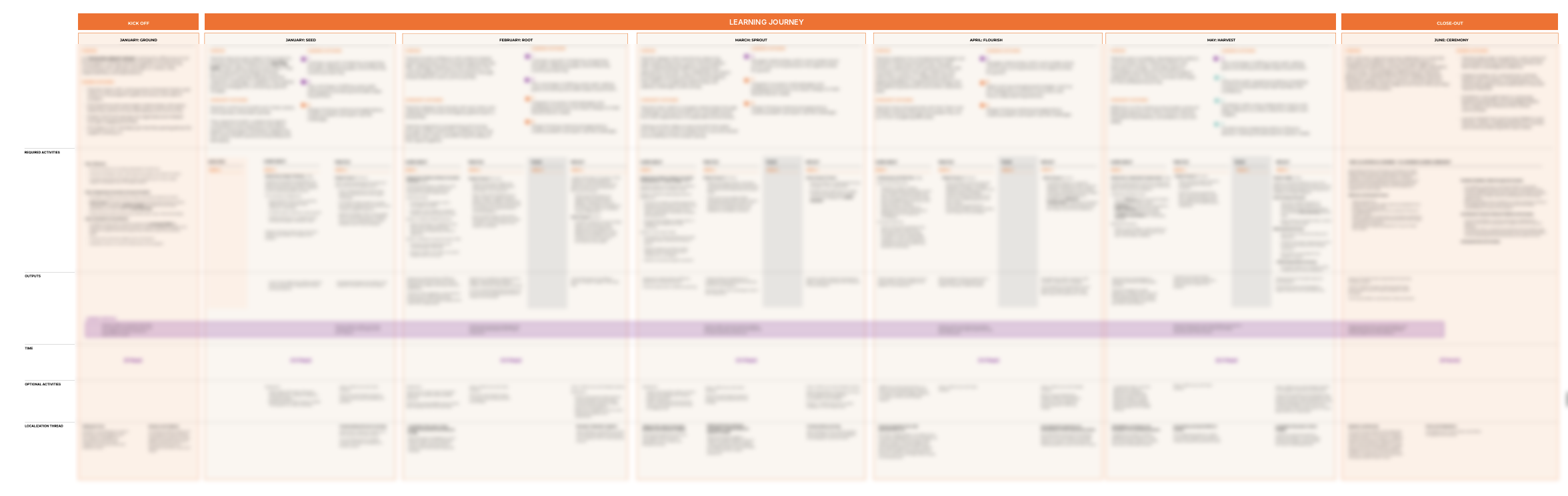
The month-by-month learning program blueprint.
Designing this community with every stakeholder, through many co-design sessions and workshops, kept us grounded in both the individual realities of teachers across the country and the systems they work within. What stayed with me most was how isolated teachers were in their day-to-day work, and how quickly they felt empowered in the workshops when they realized they weren't alone: peers across the country shared the same problems, needs and hopes.
Full case study available upon request.