Designing Trust for a Delivery App's Move into Money
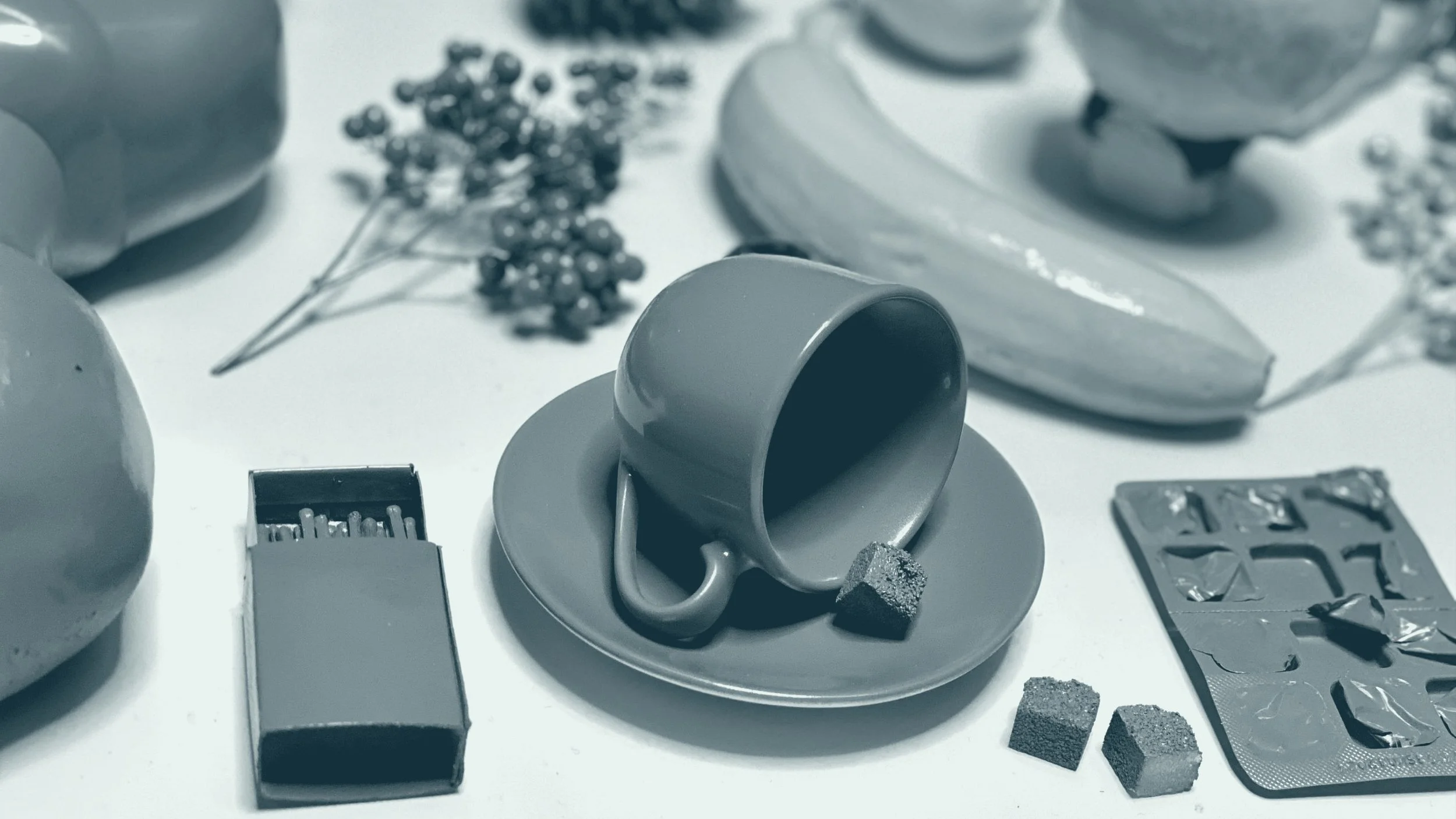
How do you carry the trust people give you with their groceries over to their money?
Client: A leading quick-commerce app in Türkiye
Year: 2021
My role: Researcher and service designer
Team: 5 people, 8 weeks
I owned: Design research (user interviews, contextual inquiry), co-creation sessions with the client's team, the experience design principles, the MVP journeys and the visual language
At a glance: 16 in-depth interviews, field research in Istanbul's markets, streets and parks, 4 money mindsets, 3 experience design principles, 4 end-to-end MVP journeys.
Challenge
A fast-growing instant delivery app had become part of everyday life for millions of households. Its next move was into financial services. The question was not only what to build, but how to carry the trust it had earned with groceries over to money, in both service and experience, without losing what people already loved about it.
Approach
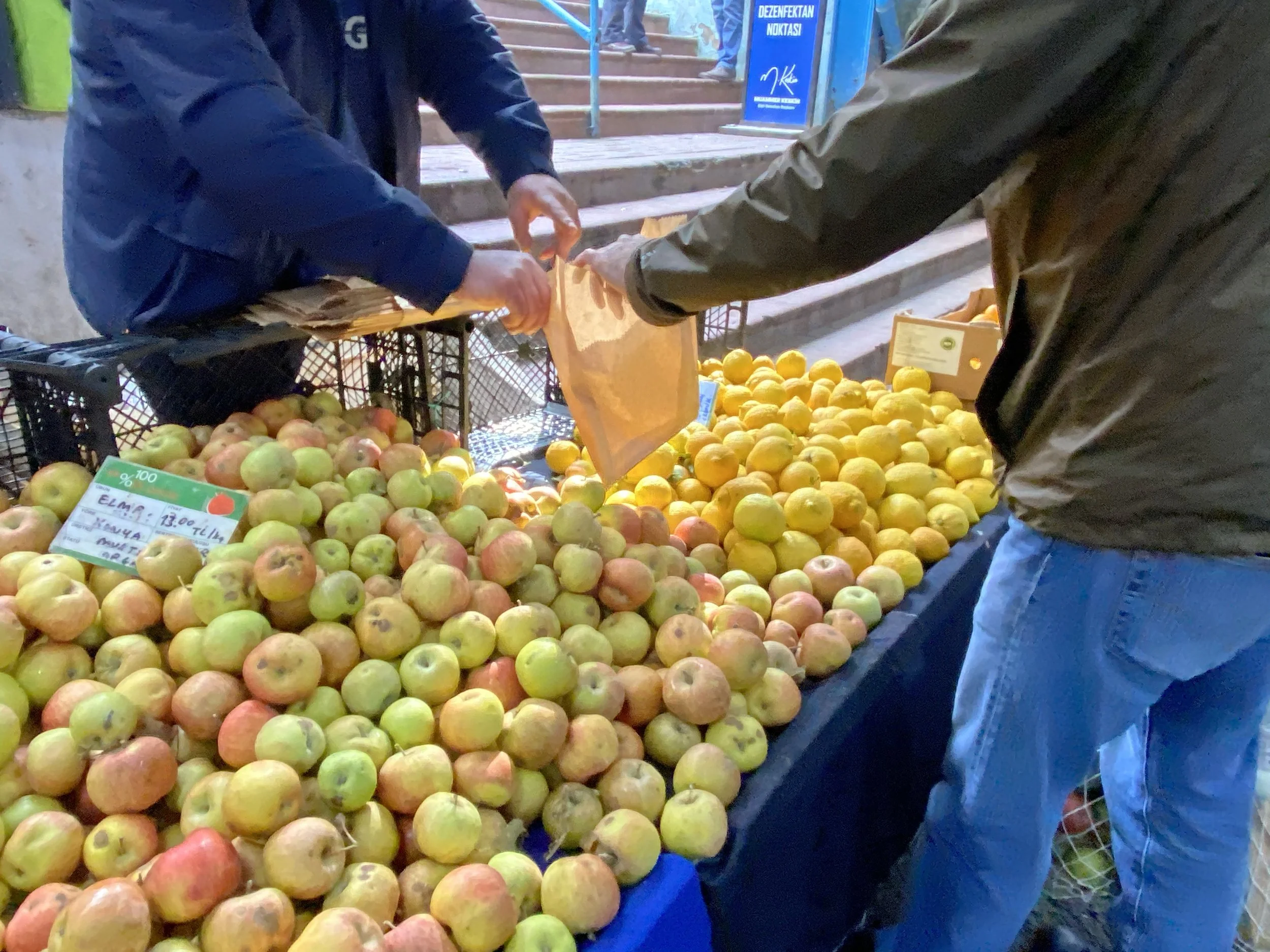
Research, synthesis and insights. 16 in-depth user interviews, plus desk research and expert interviews. We also went into Istanbul's markets, streets and parks to watch how people give, spend, share, collect and talk about money. An affinity board turned it all into 10 insights, themes, Jobs to Be Done and "mindsets," and a How Might We question we explored with the client's team in a co-creation session.
Mapping users by goals, behaviors and motivations. We identified the polarities in how people behave with money and what they want from it, which gave us four distinct mindsets. From there we defined market opportunities and the app's unique value proposition in fintech, in co-creation workshops with the internal product team.
Concepts and journeys. From rapid sketching to fleshed-out concepts for everyday money moments (auto-payments, budgets, prepaid cards), then journey wireframes that we iterated through user testing. The client's fintech team joined us in facilitated co-creation workshops throughout.
Prioritizing for launch. A priority matrix scored every concept against user Jobs to Be Done, business priorities and market priorities, to decide what to launch first.
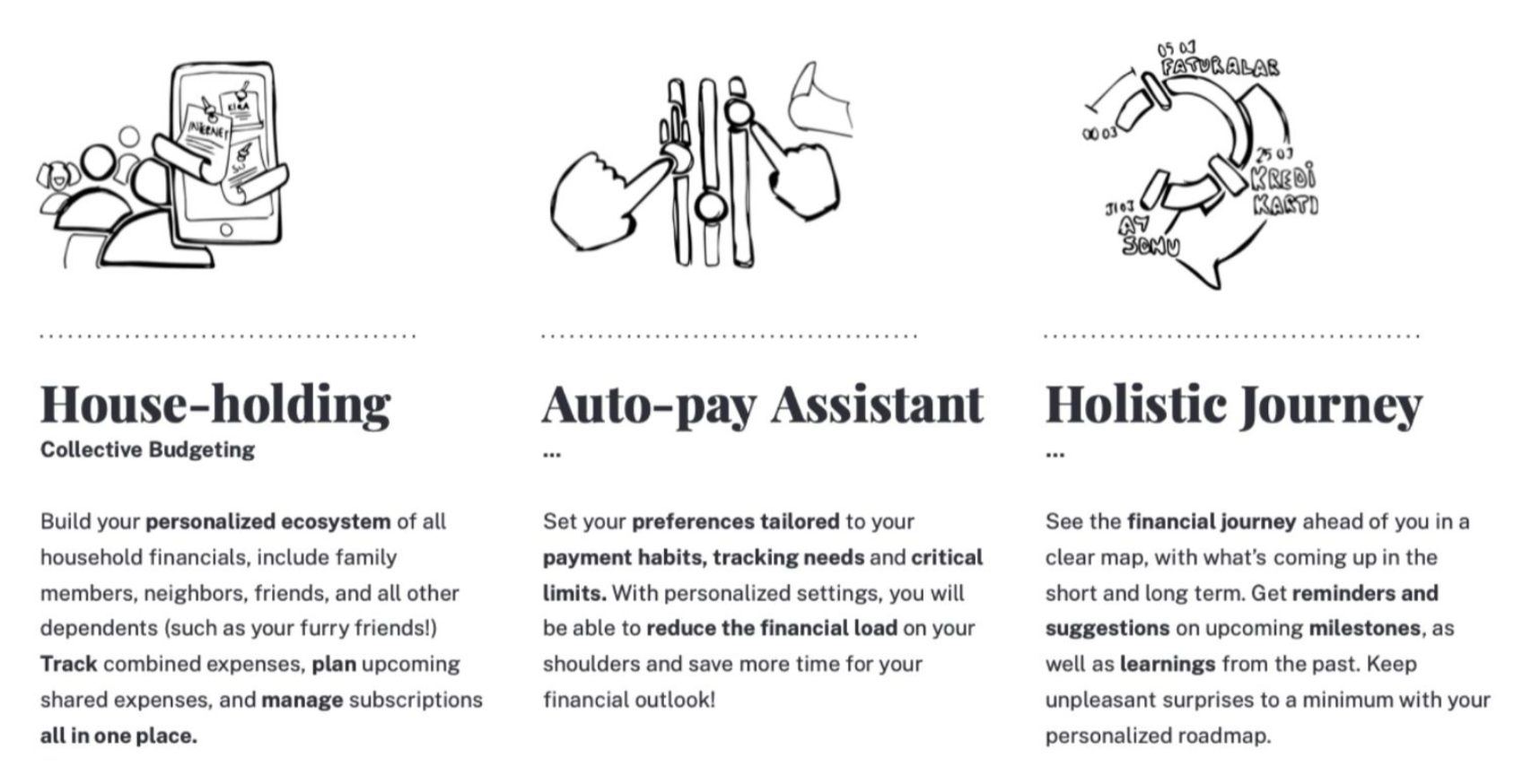
Some of the many concept sketches based on our research
Priority matrix for launch
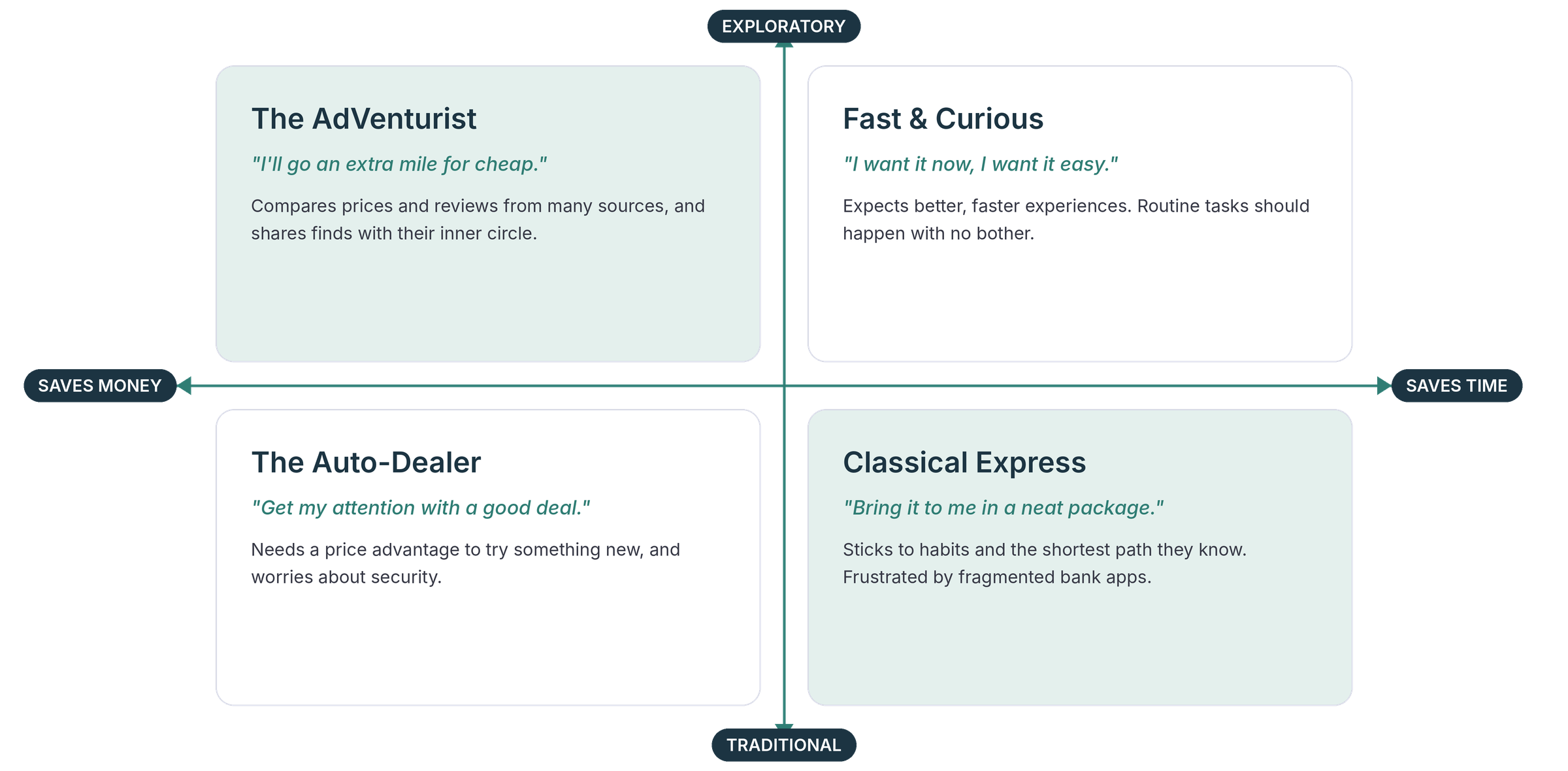
Four money mindsets
We mapped people on two axes: whether they are motivated by saving money or saving time, and whether their behavior is exploratory or traditional. Each quadrant became a mindset that product features could be designed for:
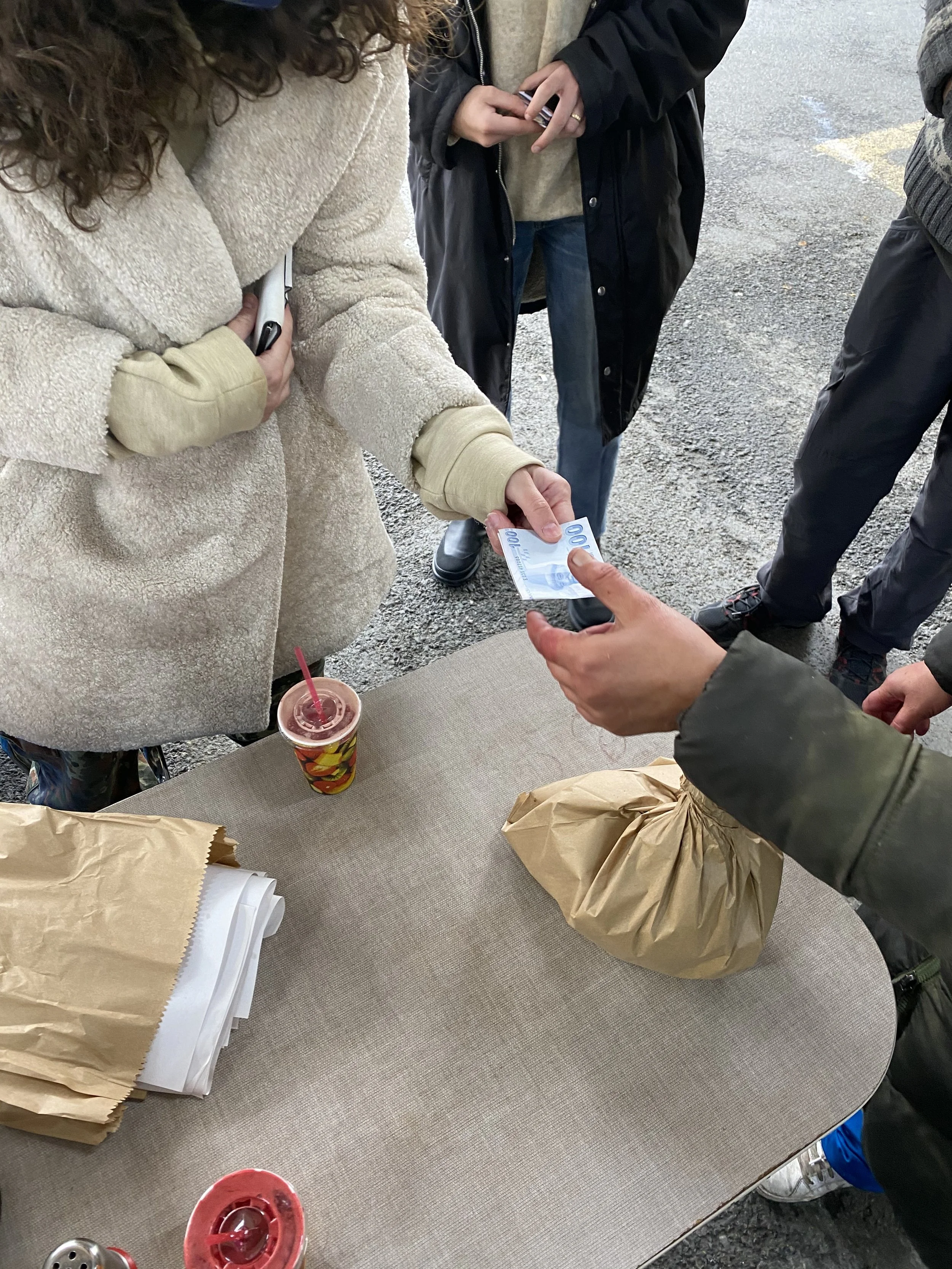
Key insight
The app had become part of the social fabric of the household. But there was a gap between the two worlds it now wanted to bridge:
While deliveries feel easy, money feels risky. Trust transfers only if new financial services feel as simple, rewarding and familiar as the service people already love.
Three experience design principles
The insight became three evergreen principles, one for each thing new services had to feel like: simple, rewarding and familiar.
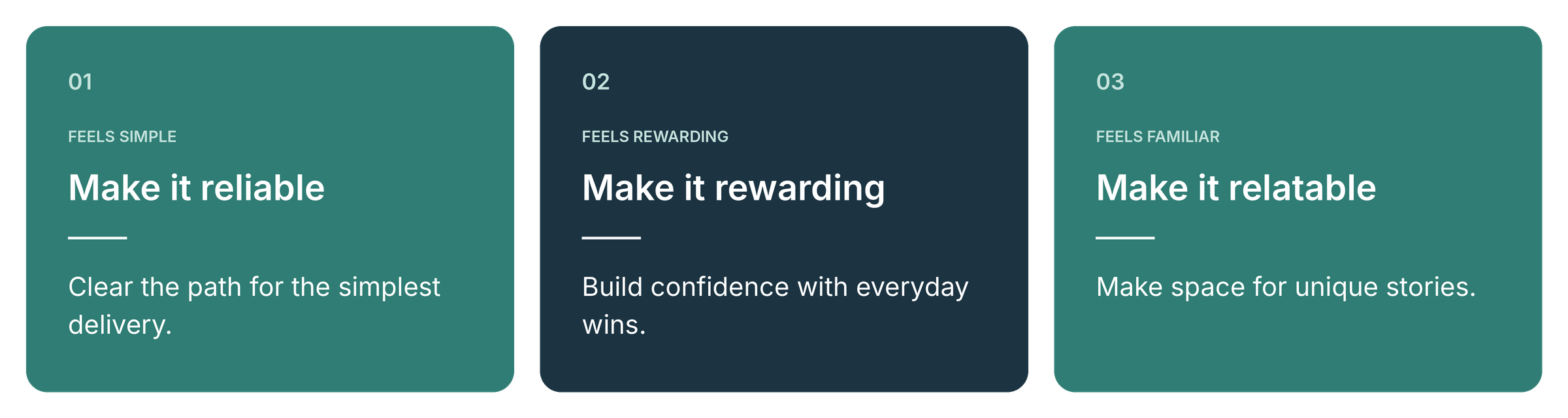
The principles became the framework for every new service and market. I led the art direction, photoshoots and design to roll them out as posters, cards and decision checkpoints that internal teams used to test their work at every touchpoint.
Outcome
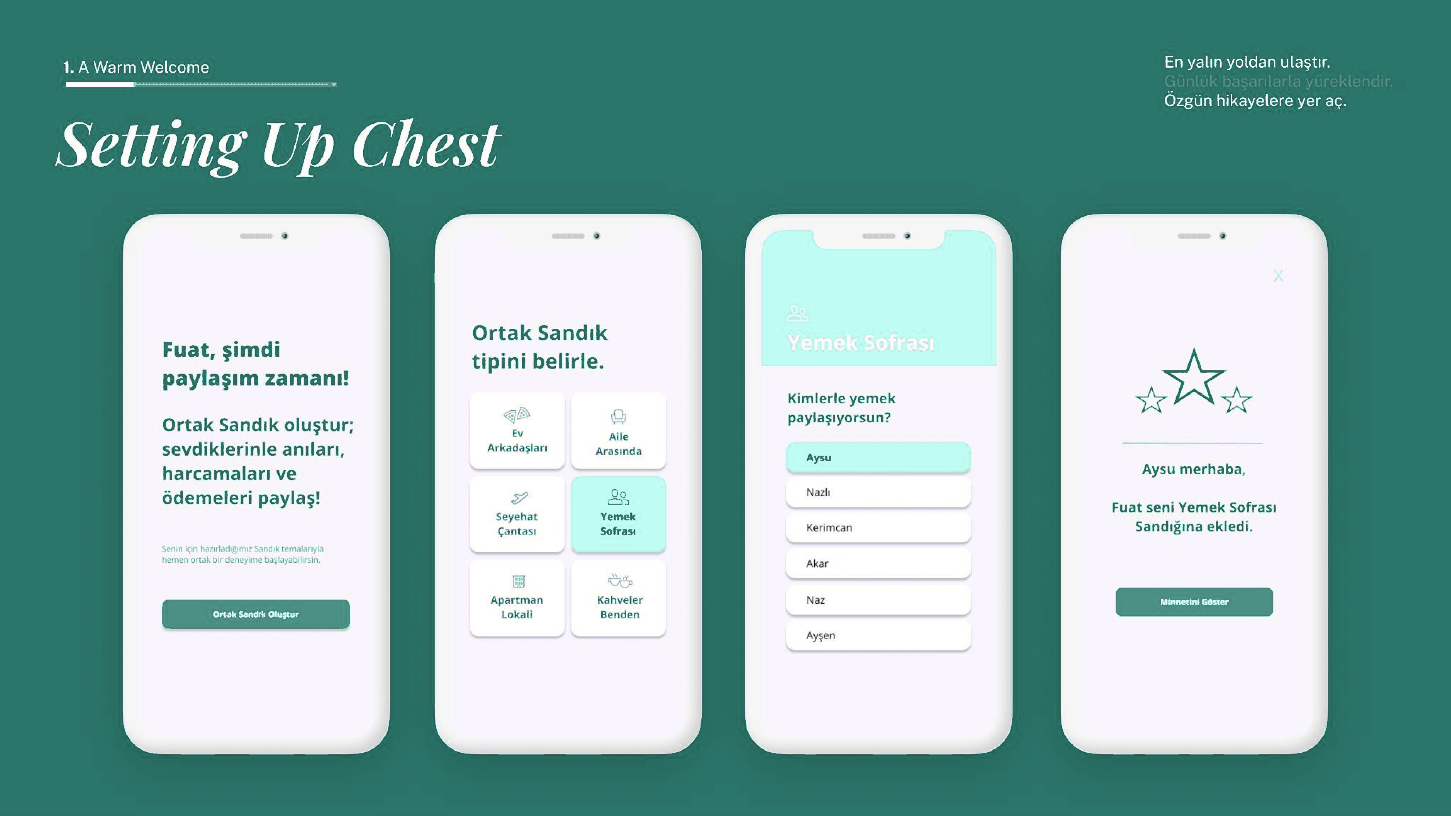
Combining user, market and business priorities with the cultural context, we designed four high-level, end-to-end journeys for the fintech MVP, each built around a real money moment from the research: a warm welcome, the abundance of payday, a shared experience and saving for the future. In the first, a user sets up a shared "chest" with the people they already share meals, trips or a flat with, so splitting money feels as natural as splitting a table.
The in-house team built on these journeys and launched the product about a year later, and the three principles became the touchstone for every new service and market.
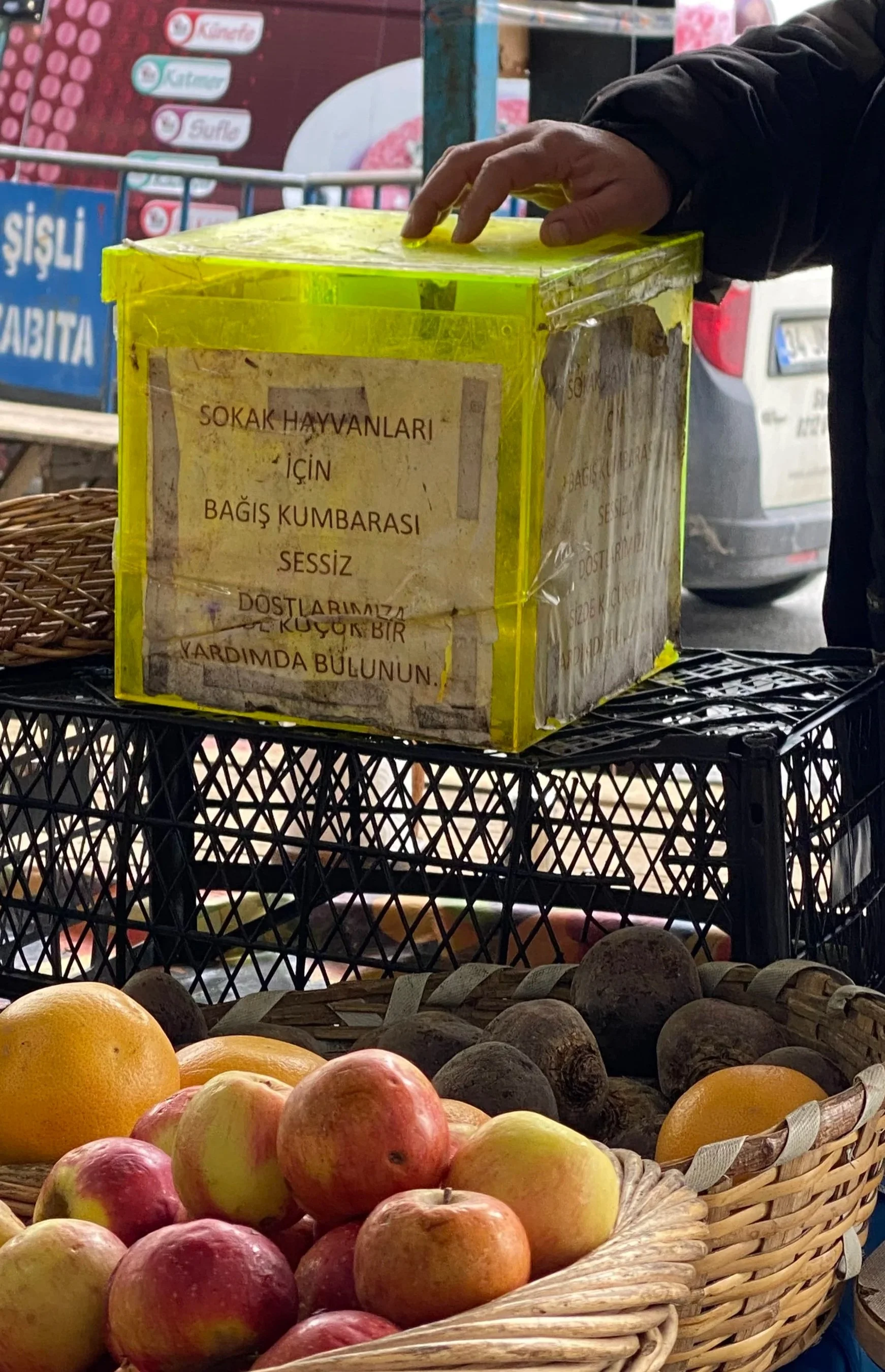
A donation box at a farmers market stall in Istanbul, for helping street animals.
This project was an exercise in understanding what a specific service and brand means within a specific cultural context, so it could grow into a much bigger part of people's lives. The field research I led was where it came alive: in markets, streets and parks, we saw what money means within the social fabric of the people we were designing for. That's what we brought back to the product team: real human insight to grow from.
Full case study available upon request.